District design
A resilient blueprint toward a sovereign future.
Two repeatable designs: a high-tech innovation district that runs the full range end to end, and the resilient mixed-use neighbourhood beneath it. Each generates its own energy, food, and compute. Each is an application waiting for the right ground.
How it connects
Hubs that trade resources, across three spheres.
At the centre sit interrelated community ecosystems that share and trade resources: non-profits, innovation districts, and accelerators. They interface with the three spheres of the innovation economy, governance, education, and industry, binding them into a working whole. This is the Tripartite Ecosystem model in built form.
Template one, featured
The high-tech innovation district, end to end.
The flagship design: a district that carries the full range from research through pre-commercialization to production, with an emphasis chosen for its ground. A research-oriented site leans toward discovery and labs. A pre-commercialization site leans toward the bridge from proven work to market. Both run the whole chain.
Energy and compute substrate
Generation, storage, and distributed compute as the foundation every venture builds on.
Research and labs
Shared wet and dry labs where discovery happens and university partners convene.
Pre-commercialization floor
The missing layer between lab and market: space to prototype, test, and de-risk at real scale.
Production and industry
Advanced manufacturing and Industry 4.0 lines that turn proven work into Canadian-owned output.
Residency and community
On-site living so founders and researchers stay, and the district earns its density from people.
Self-evaluation
The CITAble Business Index selects and steers what enters, so the district proves itself as it grows.
Two templates, one method
A high-tech district that runs the full range end to end, and the resilient neighbourhood beneath it. Each generates its own energy, food, and compute.
Template two
The resilient mixed-use neighbourhood.
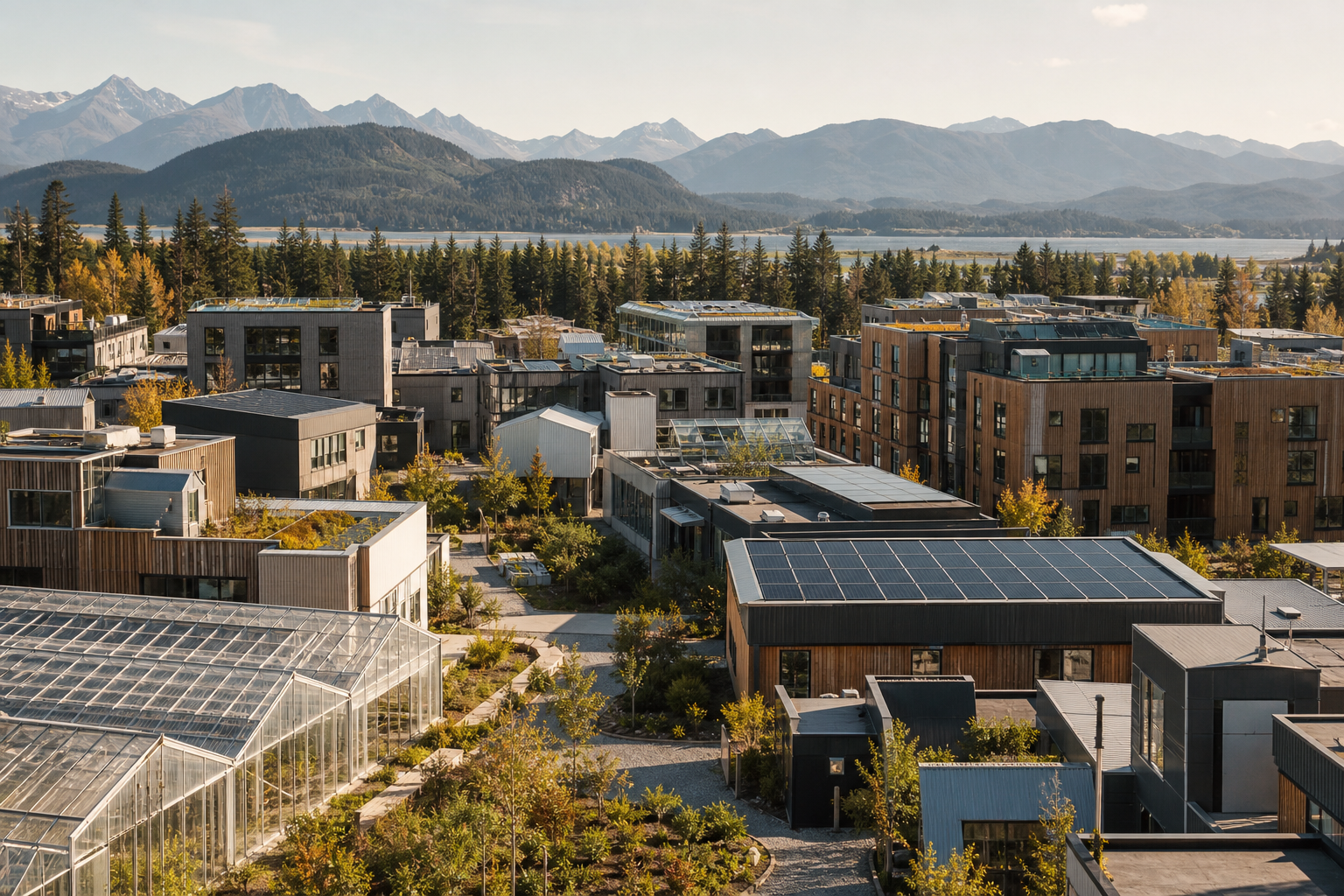
The foundation the district sits on: the minimum conditions for a neighbourhood that makes its own energy, food, and compute, and keeps running when the wider grid does not. The future of living.
Islandable microgrid
Solar on every roof, storage at the commercial core, a grid that can disconnect and keep the neighbourhood running.
On-site food
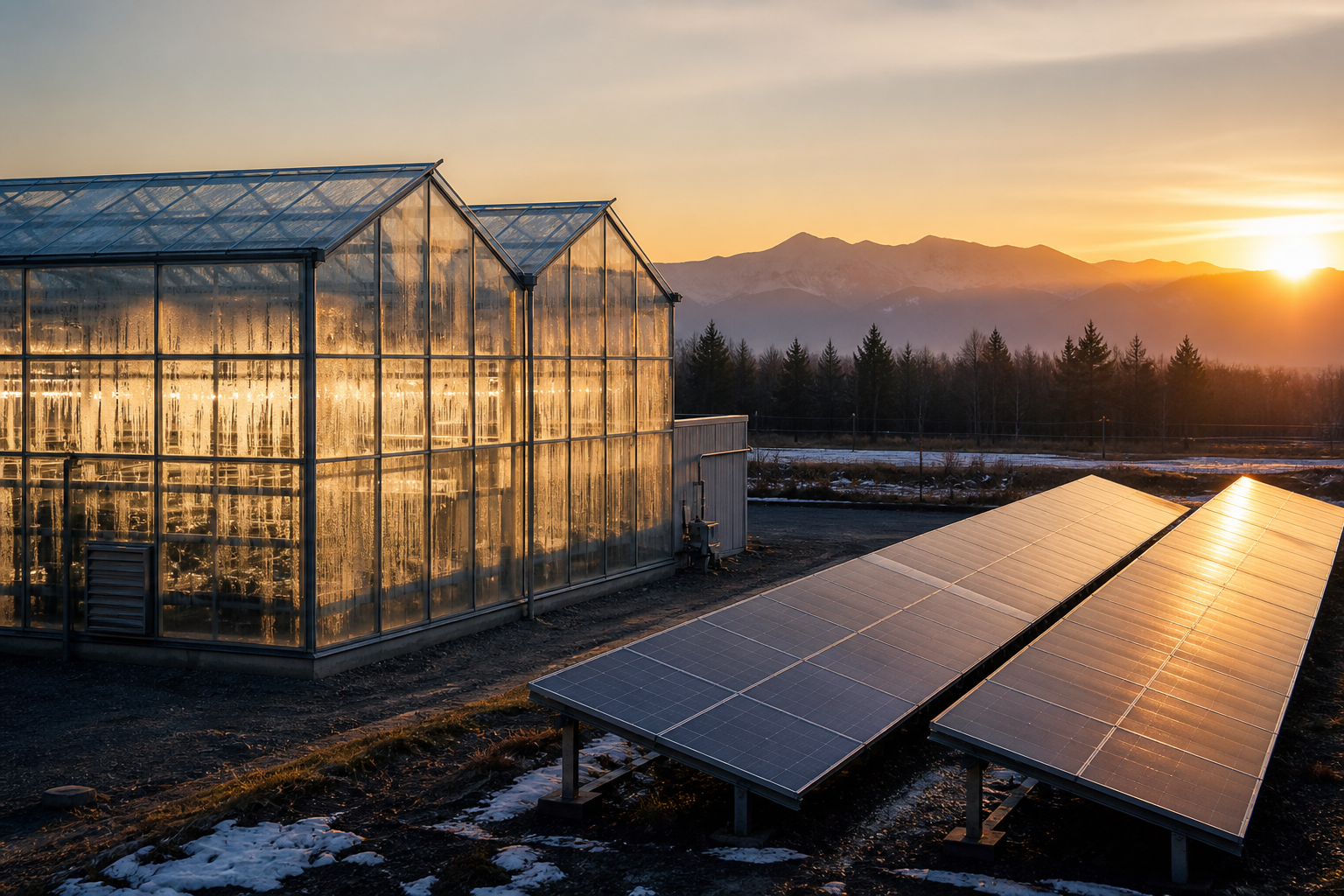
Greenhouses and community gardens that produce locally, coupled to clean power and waste heat.
Local compute
Small, distributed compute sited within the community, so data and capability stay close to the people who bear its costs.
Mixed use by design
Homes, work, research, and production woven together, not zoned apart, so the neighbourhood is lived in, not commuted to.
Designed in, not retrofitted
Resilience is built from the first plan. Retrofitting existing suburbs is impractical; new developments carry it from the outset.
Public good by design
The host community gets priority access to what the district produces, fresh food, clean power, and local compute, so the neighbourhood is repaid for what it hosts.
Applications
Two grounds, one framework.
Revitalising a research park
The Waterloo Research and Technology Park is a research-oriented application: a mature research setting whose commercialization pathways can be revived using this framework. Waterloo leans toward discovery and deep-tech research; the framework binds that research to a bridge that keeps more of its value in Canada.
A strategically located greenfield district
Markham is a strong candidate for a pre-commercialization and commercialization district. It holds Canada's highest concentration of information and communications technology workers, more than 1,500 technology companies, corporate anchors, and the largest tract of undeveloped employment greenfield lands in the Toronto region, directly adjacent to Highway 404. Its access to both reclaimable agricultural land and major highway infrastructure makes it excellent ground for a new kind of development.
The regenerative pattern
Reclaiming spent farmland.
Our ground-level data-centre pattern turns a liability into a foundation. A compute facility sited into the land runs cool through ground contact; its waste heat warms greenhouses above; its cooling water irrigates the crops. Placed on spent monoculture farmland, the pattern reclaims depleted soil and builds a regenerative community around it: energy, food, and compute reinforcing one another, with the host community given priority access to what the facility produces.
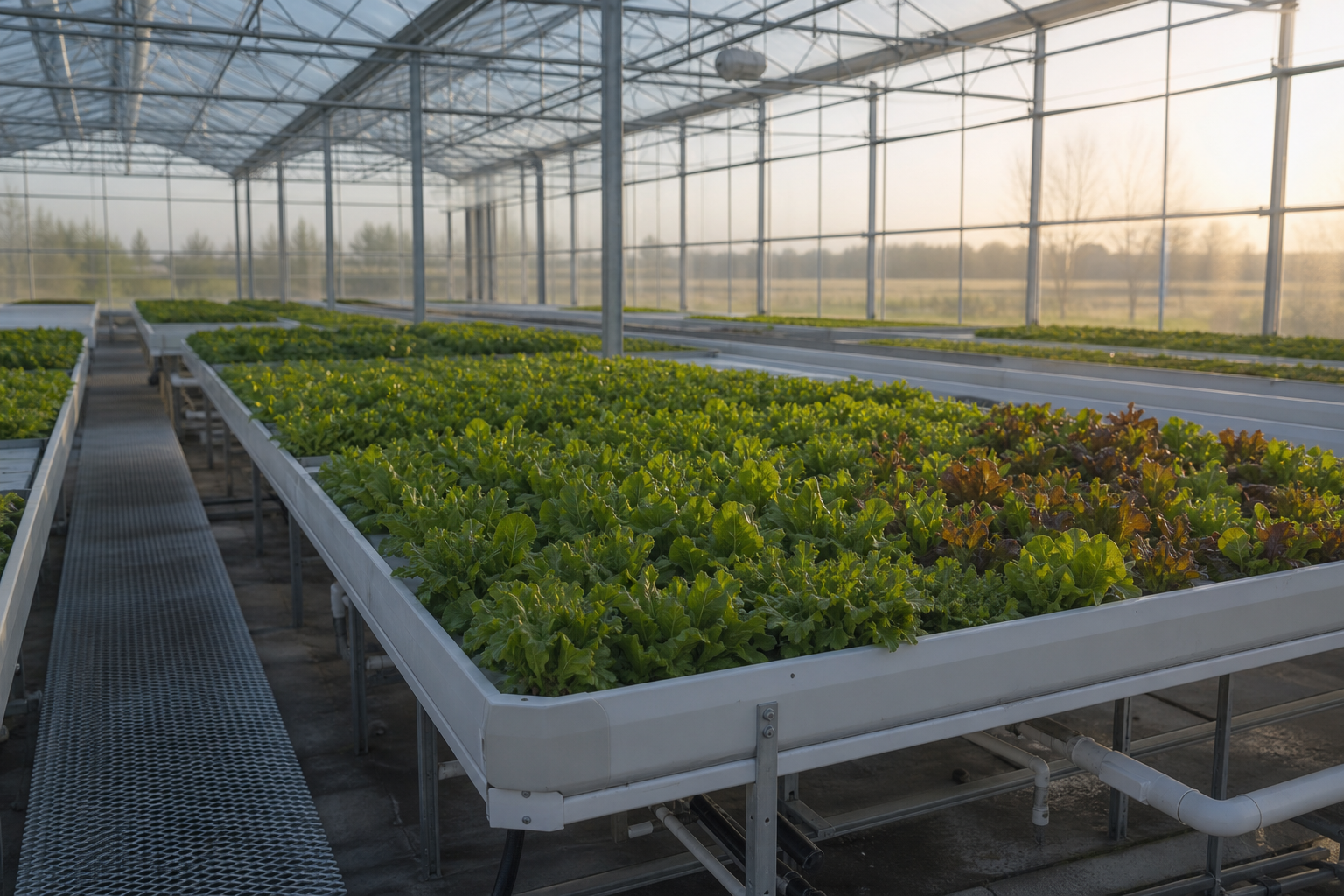
Regenerative pattern: waste heat and water from ground-level compute feed greenhouses and crops on reclaimed farmland.
Why a district, not a park
We build the founder pipeline first, then the buildings. A district earns its density from the people and ventures inside it, not from the real estate.
Build with us
Endorse it, invest in it, or join it.
Capital
A de-risked, methodology-backed coalition play toward defined Canadian futures. Returns without venture-studio dilution or origination risk, in the durable market of crossing firms back over the chasm.
Institutions
Bring your research and your alumni to a district built for actualizing Canada's futures. We offer space, access, and mission alignment.
Founders
Place, peers, mission, and mentorship, alongside top researchers, in a coalition building a sovereign Canada. The alternative to the accelerator model.
A legacy worth building