Where the chain breaks
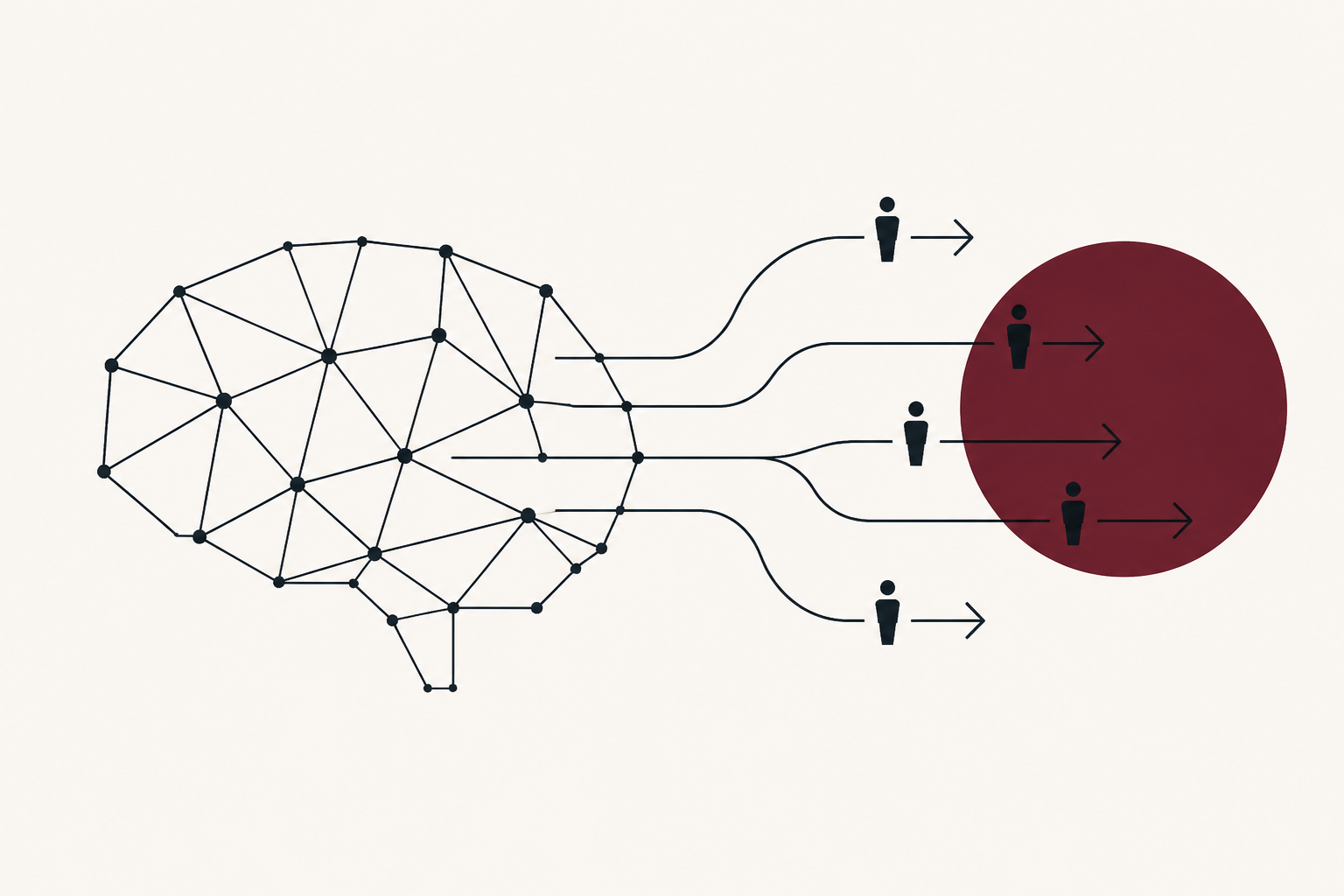
Canada’s innovation chain has strong ends and a weak middle. At one end, universities produce genuine research and world-class graduates. At the other, mass commercialization turns proven products into scale. Between them sits a gap: the stretch where a discovery has to become a company, a prototype has to become a product, and a founder has to find the capital, space, and customers to cross over.
That middle stretch has no dedicated home. Labs are built for research, not production. Accelerators process cohorts and move on. Factories want proven demand, not experiments. So the crossing happens somewhere else, usually in the United States, and the value crosses with it.
The pre-commercialization floor
The missing layer is a pre-commercialization platform: a place to practise the crossing at real scale before a venture has to survive on its own. Somewhere a founder can prototype in a working lab, test in a real facility, reach early customers through a coalition, and be assessed against the same standard every other venture in the district meets.
This is deliberately not another accelerator. An accelerator gives you a programme and a demo day. A pre-commercialization floor gives you infrastructure, peers, and a bridge to production that stays available after the programme would have ended.
Why it keeps value at home
The economics follow the floor. Cheap, abundant power and available land make projects viable that were not viable before, large-scale controlled-environment agriculture among them. Local application means local jobs for the AI and frontier-technology talent that would otherwise leave. And because the whole chain sits in one place, the value created in the crossing compounds in Canada instead of leaking across the border at the exact moment it becomes worth something.
The gap is not a mystery. It is a missing building. A district that provides the pre-commercialization floor turns Canada’s weak middle into its strongest link.